

Plant-Based Proteins Market Value to Reach US$ 38.1 Bn Driven by Health and Sustainability Trends
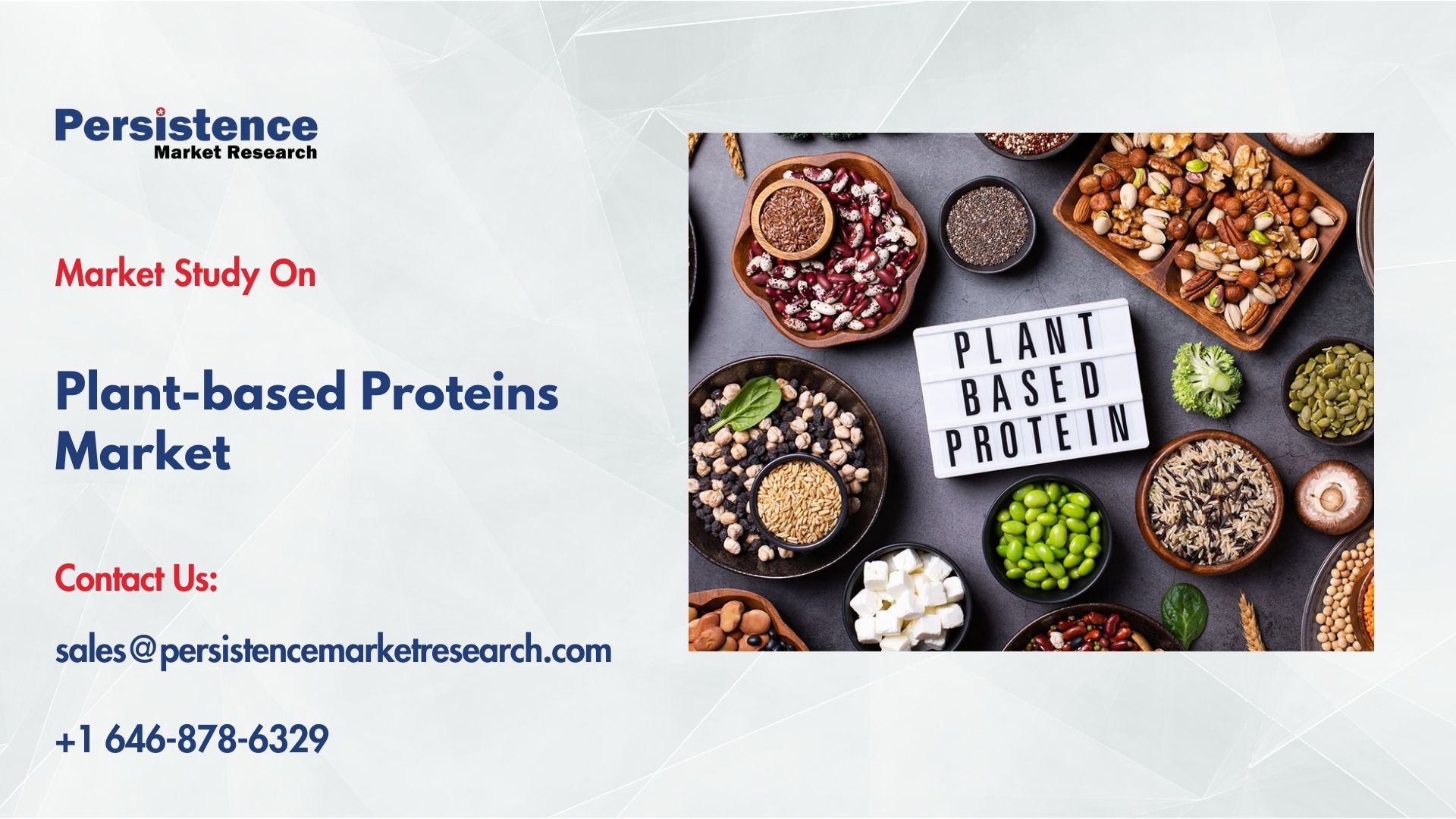
The plant-based proteins market will grow from US$22.5Bn in 2026 to US$38.1Bn by 2033, expanding at a 7.8% CAGR, driven by demand for sustainable foods
BRENTFORD, ENGLAND, UNITED KINGDOM, January 25, 2026 /EINPresswire.com/ -- The global plant-based proteins market is experiencing a significant transformation as consumer preferences, food innovation, and sustainability priorities reshape the global food and nutrition landscape. The market is valued at approximately US$ 22.5 billion in 2026 and is projected to reach US$ 38.1 billion by 2033, expanding at a compound annual growth rate (CAGR) of 7.8% during the forecast period from 2026 to 2033. This strong growth trajectory reflects a fundamental shift toward alternative protein sources across food, beverage, dietary supplement, and animal feed applications.
Plant-based proteins, derived from sources such as soy, pea, wheat, rice, and emerging crops, have gained widespread acceptance as viable alternatives to animal-based proteins. Increasing awareness of health, environmental, and ethical concerns associated with conventional animal agriculture is driving both consumers and manufacturers to adopt plant-based formulations. The market’s expansion is further supported by advancements in food processing technologies that enhance taste, texture, and nutritional value, enabling plant-based proteins to compete more effectively with traditional protein sources.
Get Your FREE Sample Report Instantly – Click Now: https://www.persistencemarketresearch.com/samples/10283
Key Drivers Accelerating Market Growth
One of the primary drivers of growth in the global plant-based proteins market is the rising adoption of flexitarian, vegetarian, and vegan diets. Consumers are increasingly reducing their consumption of animal products due to concerns related to personal health, animal welfare, and environmental sustainability. Plant-based proteins are widely perceived as cholesterol-free, lower in saturated fat, and rich in fiber and micronutrients, making them attractive to health-conscious consumers.
Environmental sustainability is another critical growth catalyst. Plant-based protein production generally requires fewer natural resources, generates lower greenhouse gas emissions, and places less strain on land and water systems compared to animal-based protein production. As governments, corporations, and consumers align with climate goals, demand for sustainable protein sources continues to rise.
Segmentation Analysis
By Source
• Soy
• Wheat
• Pea
• Rice
• Spirulina
• Others
By Form
• Isolates
• Concentrates
• Hydrolysates
By Nature
• Organic
• Conventional
By End-user
• Functional Foods
• Snacks & Cereals
• Dairy Alternatives
• Bakery & Confectionery
• Animal Feed
• Sports Nutrition
• Others
Need Tailored Insights? Request Customization Now: https://www.persistencemarketresearch.com/request-customization/10283
Regional Insights
Leading Regional Markets
Geographically, North America represents one of the leading markets for plant-based proteins, supported by high consumer awareness, strong purchasing power, and a well-developed ecosystem of food innovation startups and established brands. The United States, in particular, has emerged as a hub for plant-based product development, with significant investments in research, branding, and retail expansion.
Europe also holds a substantial share of the global market, driven by favorable regulatory frameworks, strong sustainability initiatives, and widespread acceptance of vegetarian and vegan diets. Countries such as Germany, the United Kingdom, and the Netherlands are at the forefront of plant-based food adoption, supported by robust retail penetration and government-backed sustainability programs.
Unique Features and Innovations in the Market
Innovation is a defining characteristic of the modern plant-based proteins market. Advances in protein extraction, texturization, and fermentation technologies are enabling manufacturers to improve the taste, mouthfeel, and nutritional performance of plant-based products. These innovations are helping bridge the sensory gap between plant-based and animal-based proteins, which has historically been a barrier to widespread adoption.
Digital technologies are also playing a transformative role. Artificial intelligence (AI) is being used to optimize product formulations, predict consumer preferences, and accelerate research and development cycles. Internet of Things (IoT) solutions are enhancing supply chain transparency, quality control, and inventory management, particularly for temperature- and moisture-sensitive protein ingredients. In advanced manufacturing environments, 5G-enabled connectivity supports real-time monitoring and automation, improving efficiency and scalability.
Market Highlights
The growing adoption of plant-based proteins is driven by a convergence of health, sustainability, and economic factors. For food and beverage manufacturers, plant-based proteins offer opportunities to align with consumer demand for clean-label, ethically produced, and environmentally responsible products. Their versatility allows for application across a wide range of categories, supporting portfolio diversification and innovation.
Regulatory support is also shaping market dynamics. Governments and food safety authorities are increasingly providing clear guidelines for plant-based labeling, ingredient approvals, and sustainability claims, reducing uncertainty for manufacturers and investors. In many regions, public policies promoting sustainable agriculture and reduced carbon emissions are indirectly supporting the growth of plant-based protein markets.
Secure Your Full Report – Proceed to Checkout: https://www.persistencemarketresearch.com/checkout/10283
Key Players and Competitive Landscape
• ADM
• Cargill,Incorporated
• IFF
• Glanbia plc
• Ingredion
• Kerry Group Plc
• Tate & Lyle
• Wilmar International Ltd.
• Roquette Frères
• Bunge
• Louis Dreyfus Company
• dsm-firmenich
• Burcon
• Others
Future Opportunities and Growth Prospects
The outlook for the global plant-based proteins market remains highly favorable, supported by long-term shifts in consumer behavior and food system priorities. Continued innovation in processing technologies, coupled with growing investment in sustainable agriculture, is expected to unlock new applications and improve product performance.
Evolving regulations related to climate impact, nutrition labeling, and food safety will continue to influence market development, encouraging transparency and responsible sourcing. At the same time, emerging technologies such as fermentation, AI-driven formulation, and advanced analytics are expected to accelerate product development and market penetration.
As plant-based proteins become a mainstream component of global diets, the market is poised for sustained expansion through 2033. Stakeholders that align innovation strategies with health, sustainability, and regulatory trends are likely to play a pivotal role in shaping the future of the global protein industry.
Explore the Latest Trending Research Reports:
Marine Enzymes Market: The global marine enzymes market is forecast to expand at a CAGR of 6.6% and thereby increase from a value of US$ 485.7 Mn in 2024, to US$ 759.7 Mn by the end of 2031.
Meat Dicing Machine Market: The global meat dicing machine market is forecast to expand at a CAGR of 3.8% % and thereby increase from a value of US$ 450.0 Mn in 2024, to US$ 584.2 Mn by the end of 2031.
Aishwarya Doiphode
Persistence Market Research
+1 646-878-6329
email us here
Visit us on social media:
LinkedIn
Instagram
YouTube
X
Legal Disclaimer:
EIN Presswire provides this news content "as is" without warranty of any kind. We do not accept any responsibility or liability for the accuracy, content, images, videos, licenses, completeness, legality, or reliability of the information contained in this article. If you have any complaints or copyright issues related to this article, kindly contact the author above.
